#21: The Peptide Craze & What You Need to Know
Subscribe below to become a health insider!
In This Issue:
Quick Takes: Peptides are booming; some offer great benefits, many carry substantial risk. We cut through the noise to share what you need to know about the science vs. the hype.
Community Buzz: A great book on the under-appreciated benefits of walking, and a simple way to fall asleep faster.
Member Spotlight: Bruce coached his friends Patti and Debbie, all in their mid-70s, in an ambitious program to transform their health. They used Benchmark to identify opportunities, set goals, and track their progress, and we were blown away by their results.
Company Updates: Thanks to our wonderful community for a fantastic Open House! Plus, group Office Hours are underway.
QUICK TAKES
Takeaways from content we’ve enjoyed & other timely topics
Peptides: The Science, the Hype, and What You Need to Know
What Are Peptides, Anyway?
Peptides are short chains of amino acids which are the same building blocks that make up proteins. While proteins can contain hundreds or thousands of amino acids, peptides are much smaller, typically consisting of 2 to 50 amino acids linked together. The human body naturally produces many peptides, which act as signaling molecules that regulate a wide range of functions across the cardiovascular, endocrine, immune, and nervous systems.
Their small size is actually their superpower. Peptides can slot into specific receptors with almost surgical precision, like a key that only fits one lock. That precision is exactly why researchers are so excited about them: hit the right target and skip a lot of the collateral damage that can be caused by drugs that act more generally.
Why Is Everyone Suddenly Talking About Peptides?
A few factors are contributing to the buzz lately:
1) The GLP-1 revolution. The blockbuster success of Health Canada / FDA-approved peptide-based medications like semaglutide (Ozempic, Wegovy) and tirzepatide (Mounjaro, Zepbound) for diabetes and obesity has brought peptides into the mainstream. These drugs have demonstrated that peptides can produce dramatic, measurable health outcomes.
2) The longevity quest. As people look to optimize their health from every angle, peptides have been touted as the answer: fat loss, faster muscle recovery, better skin, sharper focus. Whatever the objective, there is a peptide marketed to achieve it, whether warranted or not.
3) Social media. Influencers and athletes have made peptide stacks look as casual as a protein shake, often without mentioning the fine print.
4) The "it's natural" halo effect. Because your body already makes peptides, it's easy to assume they must be gentler than "synthetic" drugs. That assumption isn't always true.
The Approved, the Almost Approved and the Gray Market
Here's what you should know: some peptides have been through regulatory scrutiny, and most have not.
Health Canada & FDA-Approved:
Semaglutide (Ozempic/Wegovy): the GLP-1 drug that reshaped diabetes management and weight loss.
Tirzepatide (Mounjaro/Zepbound): hits two metabolic pathways instead of one, for extra impact.
Tesamorelin (Egrifta): a niche peptide for specific fat-distribution conditions.
In the Pipeline:
Retatrutide: While semaglutide hits one receptor and tirzepatide hits two, retatrutide goes for three. It activates GIP, GLP-1, and glucagon receptors simultaneously. In a phase 2 trial, participants on the highest dose lost an average of 24.2% of their body weight, rivaling bariatric surgery results. It's currently in phase 3 trials for obesity, type 2 diabetes, and liver disease; side effects so far are similar to the existing GLP-1 drugs (mostly GI symptoms like nausea and diarrhea during dose escalation). This shows promise, but we're awaiting further results and it is not yet approved by Health Canada or the FDA.
Unapproved, but Pervasive:
BPC-157: nicknamed the "Body Protection Compound." Big in injury-recovery circles, promising in animal studies, basically untested in humans, and banned for athletes by the World Anti Doping Agency.
TB-500: another popular tissue-repair peptide with the same problem: no real human orthopedic data.
CJC-1295 & Ipamorelin: usually stacked together to boost growth hormone. Animal data looks decent; human dosing and long-term safety are still question marks.
GHK-Cu: a copper peptide promoted for wound healing and anti-aging, but the clinical evidence is thin.
Melanotan II: often mislabeled online as "melatonin-2," it's a synthetic peptide marketed for tanning, libido, and appetite suppression. This is unapproved by the Health Canada or the FDA, with real safety concerns: nausea, facial flushing, cardiovascular effects, and a troubling link to new or changing moles, with evidence of possible melanoma risk.
So What Could Go Wrong?
Let's break down some of the risks associated with unapproved peptides:
The growth hormone–cancer link. Peptides like CJC-1295 and ipamorelin can increase IGF-1, a hormone that's great for repair but a double-edged sword in excess. It tells cells to multiply and tells them to stop dying, which is exactly the combo that fuels tumor growth. We see this play out in acromegaly (a disease of chronic growth-hormone excess), where cancer rates run roughly double the general population. These peptides probably don't start cancer but if something's already growing, they may accelerate it. And gray-market doses often far exceed any amount ever studied clinically.
New blood vessels: healing tool but also a tumor tool. BPC-157 and thymosin beta-4 work partly by sparking angiogenesis which is new blood vessel growth. This is excellent for healing a torn muscle, but it's also what tumors need to grow and spread. It's still unclear how much real-world risk this poses in humans but if you have any malignancy, hidden or known, this is not a theoretical risk you want to take.
What's actually in the vial? The FAERS pharmacovigilance study found compounded GLP-1 products had significantly higher odds of adverse events, contamination (19-fold), preparation errors (49-fold), suicidality (6.3-fold), and hospitalization (2.4-fold) compared to FDA-approved formulations. The rest of the unregulated peptide market has even less oversight, meaning there's often no real guarantee that the label matches what's in the syringe.
How Did We Get Here?
A few things are contributing to this gray market explosion:
Regulation lags the market. Products marketed for "fat loss" or "recovery" are predictably driving huge consumer demand, but the regulatory process takes time and isn't keeping up. Brands selling directly online can move fast and find ways to evade regulatory oversight.
The "research use only" loophole. In some cases, peptides are labeled "not for human consumption" (though they're clearly marketed for human use) as a way to get around regulatory requirements.
Labelling confusion. The naming of peptides is far from clear. For example, Melanotan II is a peptide frequently confused with melatonin, a totally unrelated sleep hormone you can buy over the counter. That kind of mixup can be dangerous, and it makes it easier for some gray market peptides to fly under the radar.
The Bottom Line
Some peptides are legitimate medical triumphs, rigorously trialed, have earned regulatory approval, and are genuinely life-changing. Others are riding their coattails with promising animal data stretched into human marketing claims, but without adequate safety testing to back it up.
The real risks aren't hypothetical scare tactics; they include IGF-1-driven cancer acceleration, angiogenesis feeding existing tumors, contaminated or mis-dosed products, and certainly a lot of "we just don't know yet."
If you're considering peptide therapy, you need to consider not only "is this peptide effective," but importantly, "has this specific compound actually been through the process that proves it is safe?" As is the case with any medication, it's critical that you have an informed conversation with your doctor before deciding to start any treatment.
COMMUNITY BUZZ
Highlights from Benchmark’s community
Entering our Fibre Era 🍎
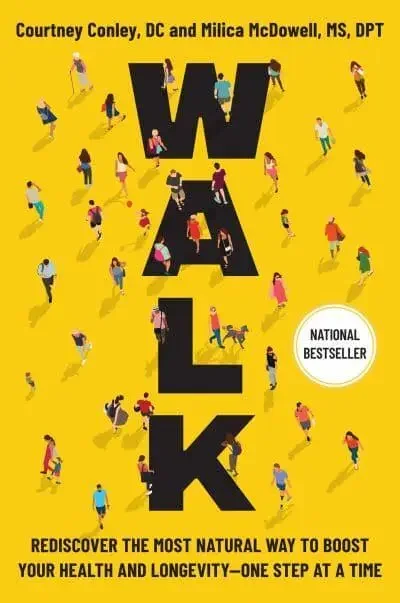
Karen recommended the book Walk, by Courtney Conley. Adam Grant says “This book does for walking what Breath did for breathing.” Conley, featured in our very first issue, is a renowned foot and gait specialist. In the book, she makes the case that walking is one of the most overlooked foundations of health and mental wellbeing. For a preview, check out her interview on the mindbodygreen podcast. She discusses how a “micro-walk” in just 5 minutes, or about 500 steps, can help kickstart a habit of movement particularly among those who are normally sedentary. She emphasizes the importance of walking for our mental health, referencing a 2004 meta-analysis that showed that more daily walking consistently correlated with fewer depressive symptoms, beginning with as few as 5,000 steps a day.
We’ve talked about how IWT, or interval walking training, can be a great way to increase the intensity of a walk. Conley points out that walking can get your heart rate up more than you may realize, particularly when carrying weight, introducing hills, and maintaining a brisk pace (about 130-135 steps per minute). She referenced a 2025 study showing that walking at a brisk pace was associated with a lower risk of developing several cancers, including lung, liver, and anal cancer. Thanks to Karen for putting this on our summer reading list!
Warm Feet, Sound Sleep ♨️
On the topic of feet, Carol shared a clip explaining why warming your feet at bedtime can help you fall asleep faster. For the same reason taking a hot shower before bed can be helpful, warming your feet helps your body cool its core temperature, which helps promote sleep. Though it's counterintuitive, it works because when your feet (and hands) are warm, their blood vessels expand. That causes more warm blood to flow from your core to your hands and feet, where it’s closer to the skin, sending excess heat into the air. The cooled-down blood then flows back to your core and reduces your core body temperature. The decline in core temperature is part of your natural circadian rhythm and helps trigger sleep onset. Don’t be shy about wearing your socks to bed, or if you run hot once asleep, warm your feet with slippers just until bedtime. 💤
MEMBER SPOTLIGHT
Featured members and their health journeys
Patti Moore, Debbie Heinrichs, and Bruce Read

All in their mid-70s, this trio shows us it is never too late to transform your health. As Patti says, “If I can do this, you can too.” As he saw their health begin to decline, Bruce stepped up to coach his friends. They came to Benchmark to identify opportunities, set goals, and track progress on their journey of discovery and improvement. After 8 months under Bruce’s coaching, Patti is deadlifting 175 lbs (at the age of 74!), Debbie is carrying 35 lb in each hand for 90 seconds, and Bruce’s DEXA results topped the charts for his age. Check out their story…
COMPANY UPDATES
The latest & greatest from Benchmark HQ
Open House Recap
Thank you for making our June 17th event a huge success! Congrats to the raffle winners: Tyler won the Benchmark DEXA + StayAbove Nutritionsupplement bundle, and Peter won the DEXA + Northern Hydration electrolyte drink pack + Benchmark-branded YETI tumbler. Shoutout to these local brands for contributing their products, and a special thanks to Sobr Market Burlington for creating and serving our signature mocktail, mixing sage with a CeroCero NA spirit. We loved catching up with longtime members and new friends!


Monthly Office Hours 💬
Thanks to those who joined July's Office Hours with Dr. Kaitlin, where we had a great discussion about peptides. This monthly group video call, part of our membership packages, now kicks off with a brief topic discussion before opening it up to Q&A. Don't miss the next one!