#19: Atherosclerosis & Why ApoB Matters
Subscribe below to become a health insider!
In This Issue:
Quick Takes: The dangers of atherosclerosis, and why measuring ApoB tells you more than cholesterol alone.
Community Buzz: How resistant starch can make pasta healthier after cooling, and how surprisingly small behavioural changes can move the needle on longevity and healthspan.
Company Updates: We'll be open on the weekends! Plus, Office Hours May 5th, and more.
QUICK TAKES
Takeaways from content we’ve enjoyed & other timely topics
Atherosclerosis & Why ApoB Matters
What is Atherosclerosis?
Atherosclerosis is a slow, silent disease in which plaque builds up inside your arteries, the vessels that carry oxygen-rich blood throughout your body. Over time, the arteries narrow and stiffen, restricting blood flow and increasing the risk of serious events like heart attack and stroke. What makes atherosclerosis especially dangerous is that it can begin as early as childhood and progress for decades without any obvious symptoms. In this article, we’ll break down how it develops, what you can do to prevent it, and why a key marker called ApoB may be one of the most important measurements for understanding your risk.
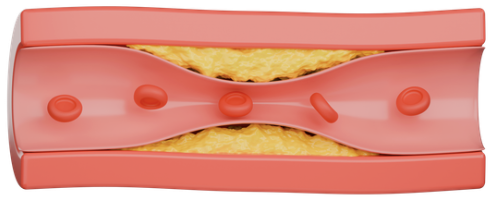
A clogged artery
How does Atherosclerosis Develop?
Atherosclerosis begins when the inner lining of your arteries becomes damaged from factors like high blood pressure, diabetes, smoking, or high cholesterol. Once damaged, cholesterol particles (LDL, vLDL, iLDL, and Lp(a)), start to accumulate in the artery wall, triggering inflammation. Your body's immune cells then rush to the area and try to clean up the cholesterol, but they can become overwhelmed, and begin to form "foam cells". As these foam cells build up, they form fatty deposits, which eventually evolve into fibrous plaque.
As plaque builds up over years to decades, it can harden and narrow the arteries, reducing blood flow to vital organs. The most dangerous moment occurs when a plaque ruptures, forming a blood clot that can suddenly block blood flow, causing a heart attack or stroke.
What You Can Do to Prevent Atherosclerosis
The good news is that we can engage in healthy habits to reduce the development of atherosclerosis. The most important steps include eating a heart-healthy diet rich in fruits, vegetables, whole grains, nuts, and legumes while limiting processed foods, and foods high in certain saturated fats. Regular physical activity helps keep your arteries healthy and improves cholesterol levels. If you smoke, quitting is one of the most important things you can do for your arteries. Maintaining a healthy weight, managing stress, and getting adequate sleep also play important roles. For some people, medications may be necessary to control cholesterol, blood pressure, or blood glucose.
Why You Should Measure Your ApoB
Apolipoprotein B, or ApoB, is an important indicator of atherosclerosis risk. Here's why: each cholesterol-carrying particle that can get stuck in your artery walls contains exactly one ApoB molecule. In the image below, the green represents the ApoB protein attached to the particle carrying cholesterol. The more particles you have, the greater the chance they accumulate and trigger inflammation.
Measuring ApoB directly counts the number of these harmful particles circulating in your blood, while the traditional LDL cholesterol marker only measures the amount of cholesterol inside. This distinction is crucial because you can have a normal or even good LDL cholesterol level but still have too many particles putting you at risk. This happens especially often in people with diabetes, pre-diabetes, obesity, or high triglycerides, where the particles tend to be smaller and carry less cholesterol in each one, but there are more of them.

An Apo-B carrying particle
Research consistently shows that ApoB predicts heart attacks and strokes more accurately than LDL cholesterol, particularly when the two measurements don't agree. ApoB levels can indicate substantially higher cardiovascular risk even when LDL cholesterol looks acceptable.
Given its importance, ApoB is a part of Benchmark's standard blood panel. The ApoB test is simple; a blood draw that doesn't require fasting and can help your doctor better assess your cardiovascular risk. Checking your ApoB level alongside your regular cholesterol panel will give you a more complete picture of your cardiovascular health and disease risk.
COMMUNITY BUZZ
Highlights from Benchmark’s community
Cool Your Carbs 🍚
Did you know that leftover pasta may actually be better for you than freshly-cooked? When starchy foods like rice, pasta, and potatoes are cooked and then cooled, some of their starch undergoes a process called “retrogradation,” and becomes “resistant starch,” which is a type of dietary fibre. Unlike ordinary starch, which is quickly broken down into glucose and absorbed in the small intestine (causing a spike in blood glucose), resistant starch “resists” digestion. Instead, it travels to the large intestine, and acts as a prebiotic, feeding the good bacteria in the gut, and creating beneficial short-chain fatty acids. If enough retrogradation occurs, it may help reduce blood glucose spikes after meals. There’s some evidence that resistant starch may help reduce inflammation and support appetite regulation through hormones like GLP-1, though these effects can vary and are still being studied. Once resistant starch forms, much of it can be retained even after warming your food back up. So you can feel good about eating those leftovers!
Small Changes, Together = Big Gains 💪
A fascinating study of 59,000 UK adults sought to answer the question: what is the minimum combination of improvements in sleep, physical activity, and nutrition (aka “SPAN”) needed to extend both lifespan and healthspan? The study found that even modest improvements in all three of these behaviours together, were associated with meaningful reductions in mortality risk. A combined increase of approximately 15 min/day of sleep, 1.6 min/day of moderate-to-vigorous physical activity (MVPA), and a slightly higher-quality diet (e.g., an additional ½ serving of vegetables per day or one fewer serving of processed meat per week) was associated with a 10% reduction in all-cause mortality risk. These are very small changes!
To reach the same level of risk reduction through any of these behaviors alone required much greater change: 60% more sleep (an additional 24 min/day), or 25% more MVPA (2 min/day). Diet changes alone were not enough to achieve this level of risk reduction. We know that these behaviours interact; for example, vigorous exercise can help you sleep better, and better sleep can help you exercise more. You can get more bang for your buck when you make changes across the “SPAN”, and this study suggests that it doesn’t take much to make a big difference.
Visceral Fat, Toxins & "Peakspan" 🎧
Carol shared an interview with Dr. Rhonda Patrick on Diary of a CEO that is packed with information and well worth a listen. Patrick explains why visceral fat, that can be present even in thin people, is so harmful to our health. She discusses its role in inflammation and insulin resistance, and how sleep can be an effective tool to combat it.
She discusses the dangers of chemicals such as phthalates (found in plastics, fragrances, packaging, and many products we use everyday), which ones are the worst offenders, and how to reduce our exposure.
Patrick also discusses a new study introducing yet another "span," known as "peakspan." Rather than how long we live (lifespan), or how long we live disease-free (healthspan), peakspan refers to how long we live within 90% of our peak performance. In this context, she makes the case for incorporating regular vigorous exercise for its high-yield benefits, even in very small doses.
"SPAN" Products 🛏️
Speaking of amping up your “SPAN” efforts, take a peak at members’ recent product picks. Cathy had great things to say about her Perfectly Snug mattress topper. Similar to Eight Sleep, featured in our Holiday Gift Guide, this helps promote better sleep through temperature regulation. It senses your body temperature and heats or cools your sleep space to match your preference (which doesn't have to match your partner’s). If trying to stay cool is keeping you up at night, this might be worth a look.
You may recall in our vitamin D issue, that Emily introduced us to Muscle5, a daily supplement that combines protein, creatine, calcium, and vitamin D into a powder. We just connected with the team behind it and learned that StayAbove Nutrition was born out of research at McMaster University. The company is led by Dr. Mark Tarnopolsky, a physician-scientist, professor, and researcher with more than 500 peer-reviewed publications in muscle physiology, mitochondrial biology, and exercise medicine. For a deep-dive into mitochondria, muscle, and aging, check out his recent interview on The Metabolic Link podcast. If you’d like to try their products, they’ve created a special code just for us! Use BENCHMARK20 at checkout for 20% off.
COMPANY UPDATES
The latest updates from Benchmark HQ

Weekend Hours! 🎉
Starting April 25th, we'll be open on the weekends! Saturday and Sunday appointments will be available for DEXA scans only, to start. Here's to making your work-week a little less hectic!
Survey Says ✔️...
Thank you for your feedback in our Member Survey, and a big congrats to Carrie B., who won the Amazon gift card! We asked how Benchmark can be more valuable to you throughout the year, and you told us: 1) built-in re-testing every 3-6 months, 2) ongoing data tracking + reporting on trends / performance vs. goals, and 3) direct access to a clinician for questions and insights. ICYMI, you can still complete the survey (we read every response). Exciting updates for #1 and #2 are in the works (stay tuned!) And re: #3, we invite you to...
...Office Hours! 🎙️
Join us for Office Hours with Dr. Kaitlin Tuesday, May 5th, 12-1PM, open to all. We'll invite you to submit your questions in advance. Register here!